Heads Up... This Page will be filled with information for your benefit
Understanding the Ingredients Hidden Behind "Fragrance"
Every day, we make countless choices about the products we use on our bodies and in our homes. From lotions and shampoos to candles, detergents, perfumes, and household cleaners, many products contain fragrance. But what most people don't realize is that the single word "fragrance" on an ingredient label can represent a complex blend of dozens or even hundreds of individual chemicals.
Among those ingredients we can find phthalates, a group of chemicals commonly used to help fragrances last longer and remain stable in a formulation. While not every fragrance contains phthalates, some have historically relied on them, and growing scientific research has explored their potential effects on human health.
This page is designed to help you understand what phthalates are, why they have been used in personal care products, what current scientific research says about their potential health effects, and how to make informed decisions when choosing products for yourself and your family.
Choose wisely for you and your loved ones
-
Let me be clear, I don't want you to be scared, I want to empower you with knowledge.
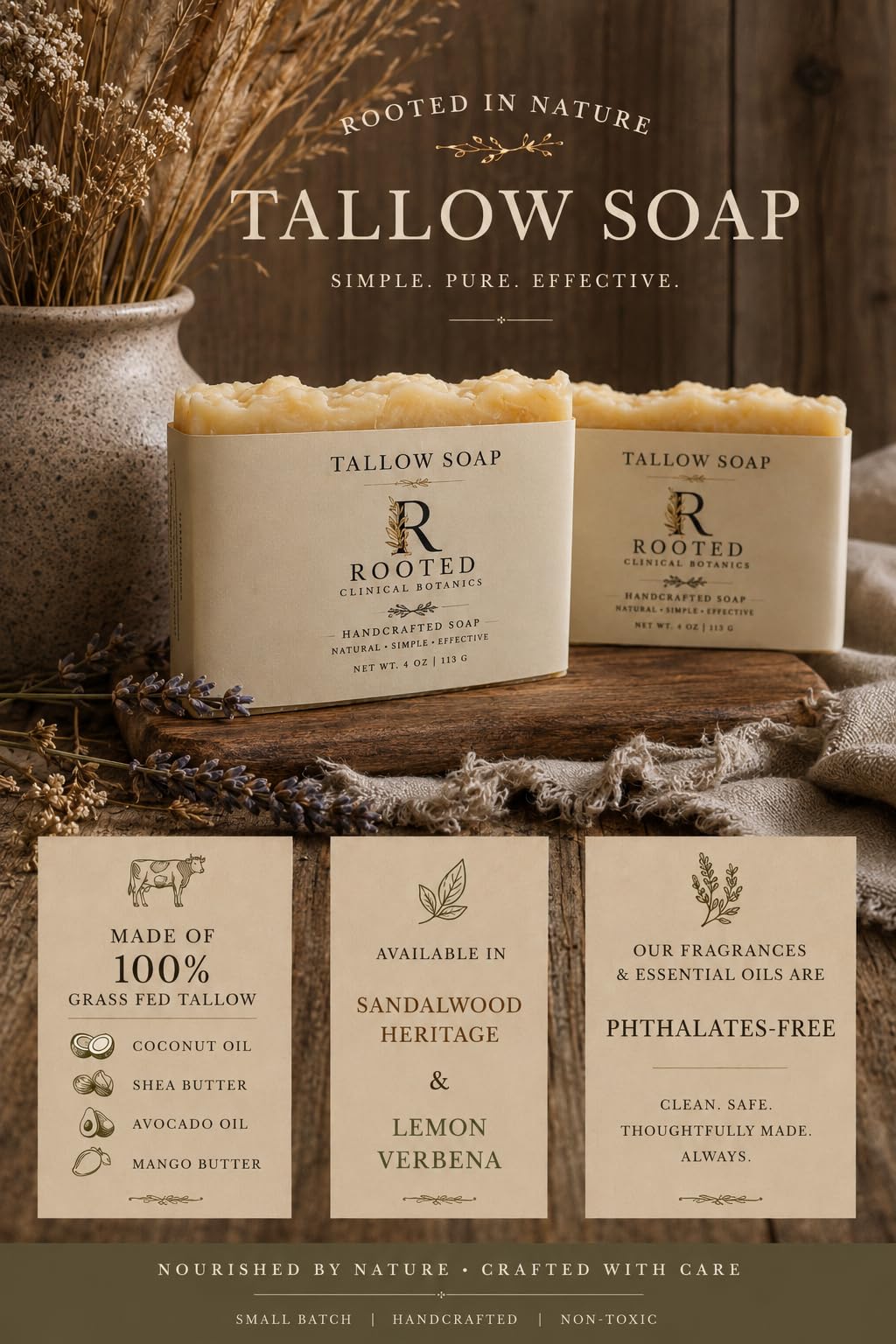
The beauty industry is full of bold claims and confusing ingredient lists. We believe consumers deserve better. Using phthalate-free fragrances is one part of our broader commitment to creating products that prioritize ingredient transparency, skin compatibility, and informed consumer choice. Because when you understand what goes into your products, you can make decisions that help you.
Have you watched this documentary?
-
"The Plastic Detox" Netflix Documentary 2026
Netflix’s 2026 documentary The Plastic Detox follows six couples experiencing unexplained infertility as they attempt to reduce their exposure to plastics and plastic-associated chemicals. Over approximately 90 days, participants change aspects of their diets, kitchens, clothing, personal-care products, and household routines while tracking chemical exposure and selected fertility markers.
The documentary raises an important question:
Can reducing everyday exposure to plastic-associated chemicals help support reproductive health?
Research supports several of the documentary’s central concerns. People are routinely exposed to phthalates, bisphenols, and other chemicals associated with plastics, and some of these substances can interact with hormonal and reproductive pathways. Studies also demonstrate that practical changes, such as selecting certain phthalate-free personal-care products and reducing consumption of heavily packaged food, can lower measured exposure to some chemicals.
Depending on the specific chemical and exposure conditions, they may affect hormone production, metabolism, receptor signaling, ovarian function, testicular function, or reproductive development.Infertility is frequently discussed as though it is primarily a women’s health issue, but male factors can contribute substantially to a couple’s fertility challenges.
Phthalate research has investigated associations with:
- Sperm concentration, count, motility, morphology, DNA integrity
How are phthalates used in the skin care industry?
Why are they use in Fragrances?
Phthalates, pronounced “THAL-ates”, are a large family of synthetic chemicals used in many consumer and industrial products.
Depending on the individual chemical, they may also be used as solvents, carriers, stabilizers, or formulation aids in products such as fragrances, cosmetics, household cleaners, flooring, vinyl materials, food packaging, medical equipment, and other everyday goods.
The term “phthalates” does not describe one single ingredient. It refers to a group of related chemicals with different molecular structures, uses, exposure patterns, and safety profiles. This distinction is important because research findings involving one phthalate should not automatically be applied to every other phthalate.
Why are Phthalates added to cosmetics?
The phthalate most commonly associated with cosmetics and fragrances in the United States has been diethyl phthalate, commonly abbreviated as DEP. The FDA states that DEP does not pose known risks to human health as it is currently used in cosmetics and fragrances. At the same time, other phthalates have different toxicological profiles, so it is inaccurate to treat all members of this chemical family as interchangeable.
Some lower-molecular-weight phthalates have been used as solvents or carriers that help dissolve fragrance materials and allow scent to remain noticeable for longer.
What Happens After Phthalates Enter the Body?
Phthalates are generally considered non-persistent chemicals, meaning they do not remain in the body for years in the same way some persistent pollutants can.
After exposure, the body rapidly breaks many phthalates down into metabolites. These metabolites are then eliminated, primarily through urine, often within hours or days. Researchers can measure these urinary metabolites through biomonitoring to estimate recent exposure.
However, rapid elimination does not necessarily mean exposure is irrelevant. Because people may encounter phthalates repeatedly through food, packaging, dust, personal-care products, plastics, and other sources, exposure can be ongoing even though each individual dose is cleared relatively quickly.
A helpful way to understand this is:
Phthalates may leave the body relatively quickly, but everyday exposure can repeatedly replace what has been eliminated.
Are All Phthalates Endocrine Disruptors?
Some phthalates are known or suspected to interfere with endocrine and reproductive processes, but the strength of the evidence and the mechanism vary by chemical.
The endocrine system is the network of glands, organs, hormones, and receptors that helps regulate reproduction, growth, development, metabolism, mood, stress responses, and many other essential functions.
An endocrine-disrupting chemical may interfere with this system by:
- Affecting hormone production
- Changing how hormones are transported or metabolized
- Binding to or blocking hormone receptors
- Altering cellular signaling
- Influencing the expression of genes involved in hormonal or reproductive function
Experimental and observational studies have raised particular concern about the anti-androgenic and reproductive effects of certain phthalates. Researchers have investigated possible relationships with hormone levels, reproductive development, ovarian and uterine function, semen quality, fertility, and metabolic health.
Evidence that a chemical can disrupt hormones under certain conditions does not mean that every exposure level will cause a hormonal disorder.
-
A scientifically more accurate conclusion is:
Certain phthalates have demonstrated endocrine, reproductive, developmental, or metabolic effects in experimental research, and human studies have reported associations between some phthalate exposures and health outcomes. The level of concern depends on the particular phthalate, dose, route, frequency, timing, and overall pattern of exposure.
What Does “Phthalate-Free” Mean?
“Phthalate-Free”
When a brand states that a product is phthalate-free, they should be able to explain the basis for the claim. Documentation may include:
- A supplier declaration stating the fragrance is phthalate-free
- An allergen or regulatory statement
- A technical data sheet
- An IFRA conformity certificate
- A certificate of analysis (COA) when applicable
Awareness Without Fear
We believe consumers deserve enough information to make thoughtful choices without being frightened by exaggerated claims. Choosing phthalate-free fragrances is one way we reduce an avoidable source of exposure while continuing to create products that are enjoyable, functional, and transparent.
We may not be able to create a perfectly chemical-free life, because everything around us, including water and plants, contain chemicals.
Scientific Literature
-
Predictors of urinary bisphenol A and phthalate metabolite concentrations in Mexican children
Read StudyThis study found that children who use personal care products may experience higher exposure to multiple phthalates.
ReferenceLewis RC, Meeker JD, Peterson KE, Lee JM, Pace GG, Cantoral A, Téllez-Rojo MM. Predictors of urinary bisphenol A and phthalate metabolite concentrations in Mexican children. Chemosphere. 2013 Nov;93(10):2390-8. doi: 10.1016/j.chemosphere.2013.08.038. Epub 2013 Sep 14. PMID: 24041567; PMCID: PMC3818401.
-
Individual and joint associations of urinary phthalate metabolites with polycystic ovary and polycystic ovary syndrome: Results from the TREE cohort
Read studyThis review examines how phthalates and their emerging alternatives may affect female reproductive health. Current evidence found in this study links exposure to ovarian dysfunction, hormonal disruption, impaired fertility, adverse pregnancy outcomes, and effects on offspring development.
ReferenceZhang, M., Liu, C., Yuan, X.-Q., Cui, T., et al. (2023). Individual and joint associations of urinary phthalate metabolites with polycystic ovary and polycystic ovary syndrome: Results from the TREE cohort. Environmental Toxicology and Pharmacology, 102, 104233.
-
Exposure to an Environmentally Relevant Phthalate Mixture Causes Transgenerational Effects on Female Reproduction in Mice
Read articleThis review examines how endocrine-disrupting chemicals, including phthalates, may affect female fertility.
Reference
Zhou C, Gao L, Flaws JA. Exposure to an Environmentally Relevant Phthalate Mixture Causes Transgenerational Effects on Female Reproduction in Mice. Endocrinology. 2017 Jun 1;158(6):1739-1754. doi: 10.1210/en.2017-00100. PMID: 28368545; PMCID: PMC5460945.
-
IMPACT OF REAL-LIFE ENVIRONMENTAL EXPOSURES ON REPRODUCTION: Phthalates disrupt female reproductive health: a call for enhanced investigation into mixtures
Read ArticleThis review examines how everyday exposure to phthalate mixtures may affect women's reproductive health. Current evidence links phthalate exposure with disruptions in ovarian function, hormone signaling, uterine health, pregnancy outcomes, and fertility. The authors emphasize that more research on real-world chemical mixtures is needed to better understand long-term reproductive effects.
ReferenceLand KL, Ghuneim SM, Williams BA, Hannon PR. IMPACT OF REAL-LIFE ENVIRONMENTAL EXPOSURES ON REPRODUCTION: Phthalates disrupt female reproductive health: a call for enhanced investigation into mixtures. Reproduction. 2025 Jan 9;169(2):e240117. doi: 10.1530/REP-24-0117. PMID: 39555988; PMCID: PMC11969576.
-
Association of phthalate exposure with reproductive outcomes among infertile couples undergoing in vitro fertilization: A systematic review
Read ArticleA 2024 systematic review of infertile couples undergoing assisted reproductive treatment found that the available evidence was limited, sometimes contradictory, and insufficient to make definitive conclusions about phthalate exposure and all IVF outcomes.
Reference
Tian X, Qin B, Yang L, Li H, Zhou W. Association of phthalate exposure with reproductive outcomes among infertile couples undergoing in vitro fertilization: A systematic review. Environ Res. 2024 Jul 1;252(Pt 2):118825.
-
Do phthalates and their metabolites cause poor semen quality? A systematic review and meta-analysis of epidemiological studies on risk of decline in sperm quality
Read StudyThe findings support continued concern and research but do not establish that all phthalates cause male infertility.
Reference
Wang H, He H, Wei Y, Gao X, Zhang T, Zhai J. Do phthalates and their metabolites cause poor semen quality? A systematic review and meta-analysis of epidemiological studies on risk of decline in sperm quality. Environ Sci Pollut Res Int. 2023 Mar;30(12):34214-34228. doi: 10.1007/s11356-022-24215-x. Epub 2022 Dec 12. PMID: 36504299.
-
Phthalate exposure and male reproductive outcomes: A systematic review of the human epidemiological evidence
Read StudyA systematic review concluded that phthalate exposure at levels encountered in human populations may affect male reproductive health, with the strongest evidence involving certain DEHP- and DBP-related outcomes. Results were not uniform across all phthalates or reproductive measurements.
Reference
Radke EG, Braun JM, Meeker JD, Cooper GS. Phthalate exposure and male reproductive outcomes: A systematic review of the human epidemiological evidence. Environ Int. 2018 Dec;121(Pt 1):764-793. doi: 10.1016/j.envint.2018.07.029. Epub 2018 Oct 16. Erratum in: Environ Int. 2019 Apr;125:606-607. doi: 10.1016/j.envint.2019.02.046. PMID: 30336412; PMCID: PMC10825890.
-
Food packaging and bisphenol A and bis(2-ethyhexyl) phthalate exposure: findings from a dietary intervention
Read ArticleA dietary intervention found that consuming fresh foods prepared with limited plastic contact substantially lowered urinary markers of BPA and DEHP exposure. This supports the documentary’s recommendation to consider food packaging, although the study was small and did not measure pregnancy or fertility.
Reference
Rudel, R. A., Gray, J. M., Engel, C. L., Rawsthorne, T. W., Dodson, R. E., Ackerman, J. M., Rizzo, J., Nudelman, J. L., & Brody, J. G. (2011). Food packaging and bisphenol A and bis(2-ethylhexyl) phthalate exposure: Findings from a dietary intervention. Environmental Health Perspectives, 119(7), 914–920. -
Reducing Phthalate, Paraben, and Phenol Exposure from Personal Care Products in Adolescent Girls: Findings from the HERMOSA Intervention Study
Read articleThe HERMOSA intervention found that replacing conventional personal-care products with products labeled free from selected chemicals reduced urinary monoethyl phthalate by an average of 27.4% over three days. The study supports the claim that personal-care choices can affect measured exposure, but it did not evaluate fertility outcomes.
Reference
Harley KG, Kogut K, Madrigal DS, Cardenas M, Vera IA, Meza-Alfaro G, She J, Gavin Q, Zahedi R, Bradman A, Eskenazi B, Parra KL. Reducing Phthalate, Paraben, and Phenol Exposure from Personal Care Products in Adolescent Girls: Findings from the HERMOSA Intervention Study. Environ Health Perspect. 2016 Oct;124(10):1600-1607. doi: 10.1289/ehp.1510514. Epub 2016 Mar 7. PMID: 26947464; PMCID: PMC5047791.

Order Yours Today!

Rooted Clinical Botanics
Rustic Artisan Tallow Soap
Share